Elytra Indicators
Elytra Indicators is a Minecraft modification that adds convenient indicators for elytra flight, designed in the style of the vanilla game.
In standard Minecraft, it's quite difficult to assess the quality of elytra flight, especially at high altitudes and speeds when chunk loading can't keep up, or when flying over the void in the End. Determining a safe pitch angle, let alone an optimal one, becomes a real challenge. Of course, you can press F3 and look at the debug screen, but this is inconvenient, and the numbers aren't always clear. This mod solves the problem by providing a set of indicators that show how your flight is progressing. The instrument design harmonizes with the vanilla game style and is slightly inspired by real aviation instruments.
Screenshots
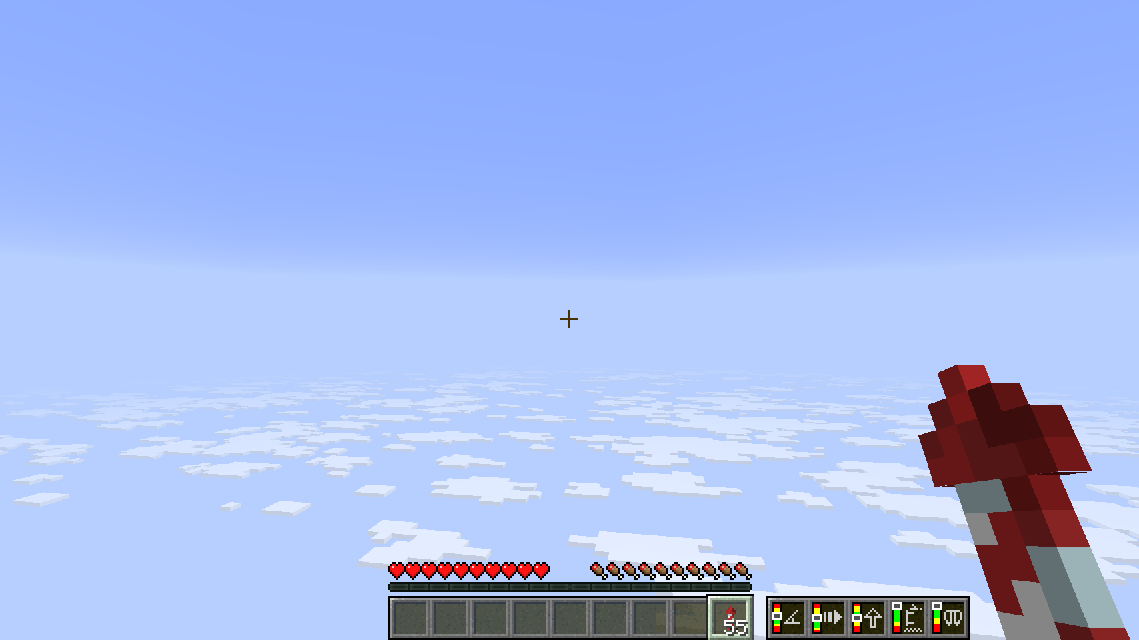
This is what the mod looks like when using the default width setting:
This is what the medium width mode looks like:

And this is what the compact mode looks like:
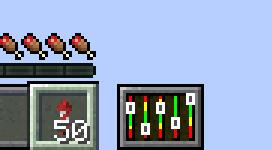
Configuration
The mod has only one configurable option - the width of the indicator panel. You can choose wide (default), medium, or compact mode. The compact mode doesn't include icons for the indicators, so it's only useful if you've already learned to read the instrument readings and want to save screen space.
The settings screen is accessible through Mod Menu or Mod Settings. You can also directly edit the configuration file elytraindicators.json in the config folder of your Minecraft instance.
Instruments
The Elytra Indicators mod adds five indicators to the screen during elytra flight. These instruments help track flight parameters and avoid crashes. From left to right, they show: pitch angle, speed, climb rate, altitude, and elytra wear.
Some of these readings are more intuitive than others, so it's recommended to review the descriptions below to understand how to use the instruments for optimal flight.
Pitch Angle

The first indicator shows your pitch angle - that is, the angle at which you're flying relative to the ground. If you pitch up, the angle increases. This converts speed into altitude gain, but the steeper the angle, the shorter the distance you'll travel. If the angle is too steep, there's a risk of "stalling" - that is, falling to the ground when you lose speed instead of maintaining flight.
If you go below the green zone, you risk crashing into the ground. If you go above it, you risk stalling.
Speed

The second indicator shows your total speed. If you fly too slowly, you risk crashing into the ground. Flying too fast isn't problematic, but due to Minecraft's physics, the faster you fly, the disproportionately more rockets are needed for further acceleration, so at a certain point it becomes impractical. However, speed can be increased almost without limit by diving.
The green zone shows the recommended speed that's reasonable to maintain over long distances.
Climb Rate

The third indicator shows your climb rate - that is, how quickly you're gaining (or, more commonly, losing) altitude. Essentially, this is your speed along the Y axis. Tracking climb rate is key to successful elytra flight. If your pitch angle is too steep or too shallow, you'll lose altitude faster than necessary, increasing rocket consumption and crash risk. For long-distance flights with minimal rocket use, adjust your angle to maintain good speed while keeping climb rate as high as possible.
If you're above the green zone, you're flying at such a steep angle that you risk losing speed and falling rapidly. If you're below the green zone, you're descending at a potentially dangerous rate.
Altitude

The fourth indicator shows your current altitude relative to the standard ground level in the vanilla game. This is an approximate estimate to help determine if you're flying high enough to avoid colliding with a mountain or End City. Specifically, it doesn't analyze the actual terrain but simply measures your current Y coordinate.
The green zone shows the recommended altitude to maintain during long flights. Stay in the upper part of this range if you're flying over mountainous terrain.
Wear

The fifth indicator shows how much durability your elytra has left. This is a non-linear scale - the indicator will remain in the green zone for a long time and only start moving into the yellow and red zones when the elytra is close to breaking. At that point, the indicator will move much faster, so stay alert.
The green zone shows that the elytra still has a reasonably safe amount of durability remaining.